Fall Festival Rentals That Handle Bigger Crowds Smoothly
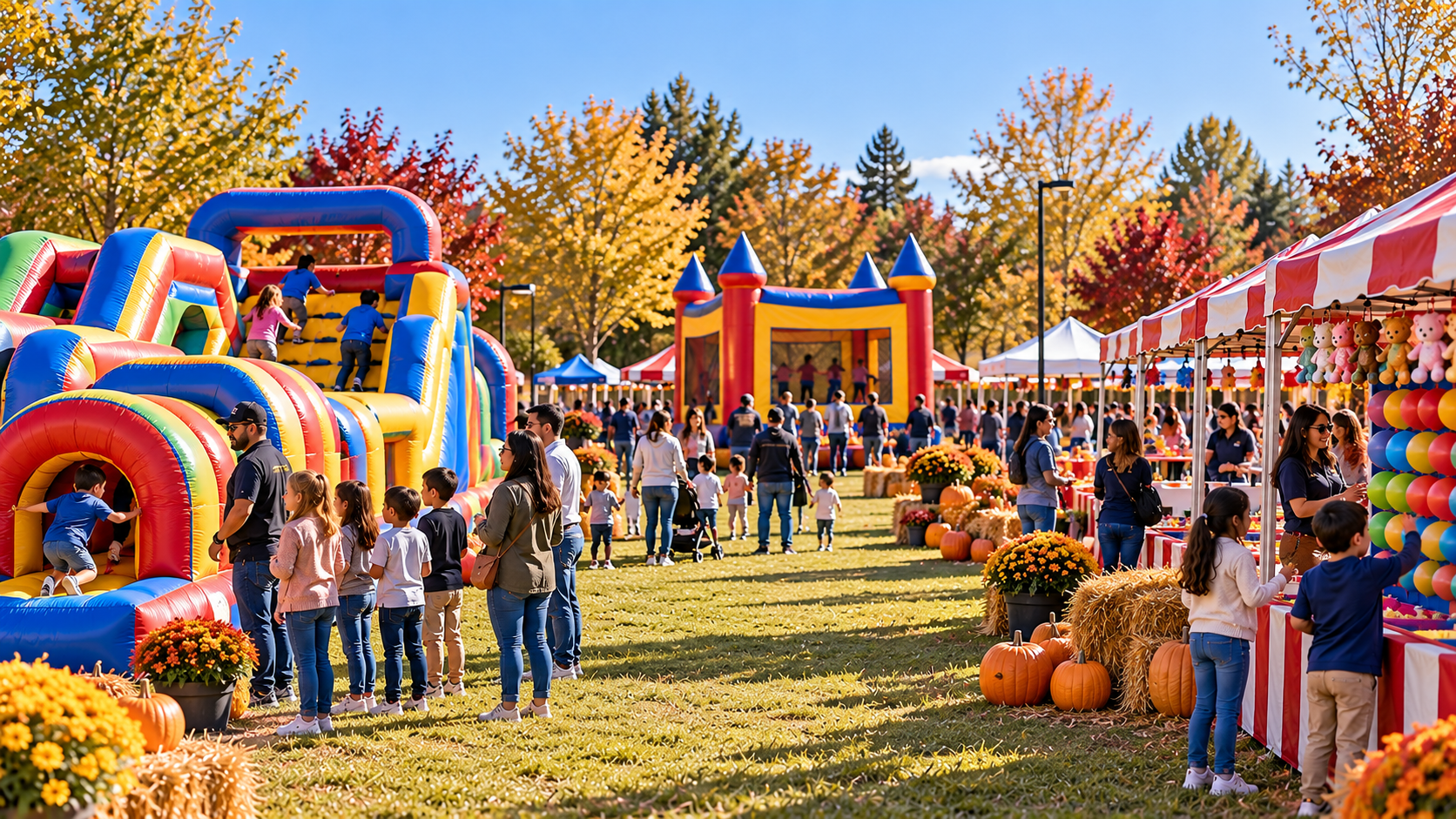
The gates open at a Sacramento elementary school fall festival. Families pour in together, children spot the biggest inflatable, and within minutes a long line starts forming before most guests have even found their way around.
The smoothest fall festival isn't necessarily the one with the most attractions. It's the event where rental selection, activity placement, and guest flow work together so families enjoy themselves without hitting constant bottlenecks.
This guide explains how to choose rentals, distribute activities across your venue, and create a welcoming experience for children, parents, volunteers, and organizers at school carnivals, church festivals, and community gatherings throughout the Sacramento area.
What You'll Learn
- Why bigger crowds change how you choose rentals
- The best fall festival rentals for different crowd needs
- How many rentals a fall festival actually needs
- Creating activity zones that keep guests moving
- Small planning choices that prevent big bottlenecks
- Fall weather, power, and site conditions
- What to confirm before booking
Which type of organizer are you?
First-Time Festival Planner
You're managing a school carnival for the first time and need to understand how rental capacity, activity mix, and layout decisions work together.
Experienced Organizer
You've run smaller events before, but this year's attendance is expected to double. You need to scale up without creating chaos.
Committee Member
You're helping coordinate rentals for a church or community festival and need to present realistic options to the planning group.
Why Bigger Crowds Change the Way You Choose Rentals
A backyard birthday party with twelve children is straightforward. One or two inflatables keep everyone busy. But when you're planning a fall festival with 300 expected attendees, the math works differently.
Total attendance and simultaneous participation are not the same thing. Not every guest will use every attraction. Some families arrive early, others show up near the end. Younger children need different activities than older ones. Parents may sit with food while kids rotate through games.
The question isn't "How many people are coming?" The real planning question is: How many people will want to participate in each type of activity during peak periods, and can the rentals you're considering handle that demand without creating frustrating waits?
Several factors shape the answer:
- Participant ages: Are you serving elementary schoolers, preschoolers, mixed families, or teens?
- Activity duration: How long does each turn or game round take?
- Queue formation: Will one popular attraction create a bottleneck?
- Guest movement: Do people arrive gradually or all at once?
- Operating stations: How many separate activities can run at the same time?
- Supervision requirements: Do you have enough volunteers or attendants?
The principle is simple: match rental selection to expected demand instead of choosing only by physical size or popularity.
The Best Fall Festival Rentals for Different Crowd Needs
Fall festival rentals for larger crowds often work best as a mix of attractions rather than one oversized activity. Depending on the event, obstacle courses, carnival games, bounce houses, and interactive sports can help provide different participation options. The right combination depends on equipment capacities, guest ages, event layout, and staffing.
Obstacle Courses for Structured Participant Flow
Inflatable obstacle courses can work well at festivals because they naturally create organized participant movement. Guests enter at one end, move through the course, and exit at the other.
This layout supports turn-taking and makes it easier for volunteers to manage queues. The physical footprint, participant restrictions, and attendant requirements matter just as much as the obstacle course's length. A 30-foot course and a 60-foot course serve different purposes depending on your space, expected participation, and supervision plan.
Before choosing an obstacle course, confirm the manufacturer's occupancy limit, the recommended age range, the required setup clearance, and whether an attendant must supervise continuously.
Carnival Games for Multiple Activity Stations
One large inflatable might attract a long line. Carnival game rentals spread participation across several stations, giving guests more choices and reducing congestion at any single location.
Traditional games like ring toss, basketball shootout, and bean bag toss can accommodate mixed ages when activity rules and equipment are matched appropriately. Many carnival games work well with volunteer supervision rather than requiring dedicated trained attendants, which makes them practical for school and church events where volunteers are managing multiple responsibilities.
The main planning consideration is how many game stations you can staff and where you'll place them to encourage natural guest flow around the venue.
Bounce Houses for Defined Age Groups
Bounce houses work best at larger events when organizers create dedicated activity zones for specific age ranges. A bounce house designed for younger children shouldn't mix with older kids who might accidentally cause collisions.
Supervised rotation and strict occupancy limits prevent overcrowding. When families understand that their child will get a turn after the current group finishes, they're more patient than when a bounce house becomes a free-for-all with no clear entry system.
Interactive Sports Games for Older Participants
Basketball challenge inflatables and interactive sports games give older children and teens an activity choice that feels different from traditional bounce houses. These rentals often appeal to guests who want a competitive element or a quick challenge rather than extended jumping time.
Age suitability and game-specific operating rules still apply. Verify the equipment's participant restrictions before adding it to your festival plan.
Tents, Tables, and Chairs for Supporting Event Areas
Attractions get attention, but every successful festival needs infrastructure. Tables, chairs, and tents create spaces for food service, volunteer check-in, ticket sales, raffle displays, and family seating.
Covered areas give parents somewhere to sit while children play. Food stations need tables. Volunteers running game booths need workspace. These aren't substitutes for inflatables, but they're essential support equipment that makes the entire event function smoothly.
Important: Tents provide shade and weather protection, but they do not make it safe to operate inflatables during rain, thunderstorms, or high winds. Always follow the rental provider's weather policy and equipment-specific operating restrictions.
| Rental Category | Potential Festival Role | Main Constraint |
|---|---|---|
| Obstacle courses | Organized participant activity | Capacity, footprint, entry/exit flow |
| Carnival games | Dispersed activity stations | Volunteers and equipment availability |
| Bounce houses | Dedicated jumping areas | Age grouping and participant limits |
| Interactive sports games | Additional challenge stations | Age suitability and game-specific rules |
| Tents, tables, and chairs | Seating, food, and support functions | Layout, access, and approved installation |
How Many Rentals Does a Fall Festival Actually Need?
This is the question every organizer asks, and the honest answer is: there is no universal formula based on attendance alone.
A festival expecting 200 guests might need fewer rentals than an event with 150 attendees if the first group arrives gradually over four hours while the second event sees everyone show up in the first 30 minutes. Participant ages, activity preferences, and available volunteers all shape the realistic rental count.
Here's a practical planning method that works better than guessing:
Simple Festival Capacity Planning
- Estimate total attendance based on past events, invitations sent, or ticket sales
- Estimate participation rate for each activity type (not everyone will use everything)
- Identify peak periods when most guests will be present
- Confirm equipment occupancy limits and approximate turn duration for each rental
- Determine staffing requirements for supervision and queue management
- Adjust the activity mix based on realistic capacity rather than wishful thinking
Here's a hypothetical example to illustrate the concept (this is not a Sacramento Party Jumps product specification or operating recommendation):
If a hypothetical obstacle course can serve 4 participants every 3 minutes under approved operating conditions, its mathematical maximum would be 80 participants per hour before accounting for setup transitions, safety checks, volunteer breaks, or other real-world delays.
That number is never the actual planning estimate. Real capacity depends on the specific equipment's requirements, your staffing plan, and expected operating conditions. The value of this exercise is learning what questions to ask your rental provider.
When you understand how occupancy limits and turn duration affect throughput, you can make informed decisions about whether your event needs one large attraction, several smaller ones, or a combination of activities that distribute participation naturally.
Create Activity Zones That Keep Guests Moving
A successful fall festival layout isn't random. Grouping activities by function and age appropriateness helps families navigate the event and reduces congestion.
High-Energy Attractions
Place obstacle courses and larger inflatables where they have approved clearance on all sides. These attractions need room for queues, entrance zones, exit paths, and required safety buffers. Positioning them near a venue edge or in a corner often works better than placing them in the center where they block sight lines and foot traffic.
Games and Short-Activity Stations
Carnival games work well distributed around the festival perimeter or grouped in a midway-style arrangement. Spreading game stations gives attendees several choices and prevents everyone from clustering in one area. Each station needs workspace for the volunteer running it and enough room for a small participant queue without blocking pathways.
Younger Children's Activities
If your festival serves a wide age range, designate a specific area for younger children with age-appropriate bounce houses or smaller inflatables. This separation keeps preschoolers safe and gives parents a contained area where they can supervise without chasing kids across the entire venue.
Seating, Food, and Rest Areas
Position tables, chairs, and tents away from high-traffic attraction entrances and exits. Families need accessible space where they can sit, eat, and rest without being in the way of guests moving between activities. Food service areas should have clear access paths so volunteers can deliver supplies and handle trash without crossing through game stations or inflatable queues.
⚠️ Critical layout requirement: Keep circulation paths, accessibility routes, and emergency access clear. Your venue may have specific requirements for pathway widths, emergency vehicle access, and ADA-compliant routes. The illustrative activity zones described here are planning concepts, not engineering specifications or fire-safety approvals.
Small Planning Choices That Prevent Big Festival Bottlenecks
The difference between a smooth festival and a frustrating one often comes down to operational details that seem minor until they're missing.
Clear Signage
Post visible signs identifying each activity and where queues should form. When families know where to stand and what activity they're waiting for, lines organize themselves naturally.
Designated Entrances and Exits
Mark where participants enter and leave each inflatable. Mixing entry and exit traffic creates confusion and safety concerns, especially for obstacle courses.
Age or Size Grouping
Enforce equipment-specific age and size restrictions. Mixing very young children with much older ones in the same bounce house creates collision risks.
Attendant Responsibilities
Assign specific volunteers to each station and make sure they understand their role: managing turns, enforcing occupancy limits, and watching for unsafe behavior.
Queue Space Planning
Give each attraction enough room for a waiting line that doesn't block other activities, food service, or walkways. Use ground markers or ropes if needed.
Planned Participant Rotation
Decide in advance how long each turn lasts and how you'll signal when it's time for the next group. Consistency prevents arguments and keeps things moving.
It's also helpful to designate one person as the primary rental coordinator who handles all communication with the rental provider, confirms delivery times, addresses equipment questions, and manages any day-of issues. When multiple committee members contact the provider separately, important details can get lost.
For more guidance on coordinating school and church events without duplicate bookings or miscommunication, see Sacramento Party Jumps' guide on planning school and PTO events.
Fall Weather, Power, and Site Conditions Still Matter
October and November in Sacramento usually bring beautiful outdoor weather, but fall festivals still need contingency plans for rain, wind, and temperature changes.
Inflatables cannot operate during rain, thunderstorms, or high winds regardless of whether tents are present. Sacramento Party Jumps' weather policy prohibits inflatable use under these conditions. Check current policy details and any stricter equipment-specific restrictions before finalizing your event plan.
🚩 Weather Red Flags
- Active rain or thunderstorms
- High wind warnings
- Forecast predicting severe weather during event hours
- Ground saturation from recent rain
✓ Site Planning Checklist
- Level, dry ground suitable for staking or weighting
- Confirmed electrical capacity for all equipment
- Generator arrangements if outlets insufficient
- Clear delivery and setup access
- Venue permits and insurance documentation
Other practical site considerations include:
- Ground conditions: Wet, soft, or uneven surfaces may not provide adequate anchoring
- Power needs: Confirm total electrical load and available outlets before the event day
- Generator placement: If generators are required, position them away from guest areas and follow all safety requirements
- Delivery access: Ensure trucks can reach setup locations without crossing restricted areas
- Venue permissions: Obtain required approvals, permits, and insurance documentation well in advance
- Backup plans: Have alternative indoor activities or rescheduling options if weather forces cancellation
For detailed technical requirements, review Sacramento Party Jumps' power and setup zone planning guide.
What to Confirm With Your Rental Provider Before Booking
Before finalizing your fall festival rental reservation, work through this checklist with your provider:
Festival Rental Planning Checklist
- Event date and operating hours including setup and teardown windows
- Expected attendance and participant age ranges
- Venue location and usable setup dimensions
- Requested activity categories and specific equipment preferences
- Equipment occupancy limits and supervision requirements
- Power requirements and generator needs
- Surface and anchoring restrictions for your venue
- Delivery and pickup timing that works with your event schedule
- Weather contingencies and cancellation policies
- Actual product availability for your date
- Total rental costs including delivery, setup, and any additional fees
This conversation should happen before making your rental commitment, not after. The more specific information you provide about your event, the better your rental provider can recommend appropriate equipment and identify potential logistics issues.
Build a Festival That Feels Fun, Not Frantic
A successful fall festival isn't measured by how many inflatables you rent. It's measured by whether children had fun, parents felt comfortable, volunteers managed their responsibilities without stress, and organizers created an experience the community remembers positively.
The right mix of attractions and thoughtful planning often matters more than simply choosing the largest number of units. When you match rental selection to realistic participation demand, create logical activity zones, and handle operational details before the event starts, you're building the foundation for a smooth celebration.
Sacramento Party Jumps serves schools, churches, and community organizations throughout the Sacramento area with obstacle courses, carnival games, bounce houses, interactive sports equipment, and supporting event rentals. The team understands the specific challenges of larger fall festivals and can discuss rental options, capacity planning, and logistics coordination for your event.
Planning a School Carnival, Church Festival, or Community Celebration in Sacramento?
Tell Sacramento Party Jumps about your event date, venue, expected crowd, and the activities you're considering. Our team can help you explore rental options and confirm the details that matter before you book.
No pressure. No pitch. Just practical guidance for your fall festival.
Book Online NowFrequently Asked Questions
What rentals work well for large fall festivals?+
Obstacle courses, carnival games, bounce houses, and interactive sports can be considered, depending on equipment restrictions, expected attendance, participant ages, and venue space.
How many inflatable rentals do I need for a school festival?+
There is no fixed number. The organizer should consider simultaneous participation, individual equipment capacity, event duration, and staffing.
Can obstacle courses help manage participant lines?+
Some obstacle course layouts allow organized entrances, exits, and participant turns, but actual capacity and supervision requirements determine how they can be operated.
Are carnival games suitable for mixed-age festival crowds?+
Many traditional carnival games can serve a range of guests, but each activity should be matched to appropriate ages, rules, and staffing.
What should I confirm before reserving rentals for a Sacramento fall festival?+
Event space, surface suitability, expected attendance, equipment availability, age restrictions, supervision, power, permits, weather policies, and delivery arrangements.